Roof Leak Repair in Downtown Fullerton from $200. Finding where the water gets in, not where the stain shows. Free inspection and a written quote.
Downtown holds the oldest building stock in Fullerton, and most of what leaks there is low slope behind a parapet rather than a pitched roof. The parapet coping is the usual culprit: once the joints open, water gets into the wall head and appears inside nowhere near the roof itself.
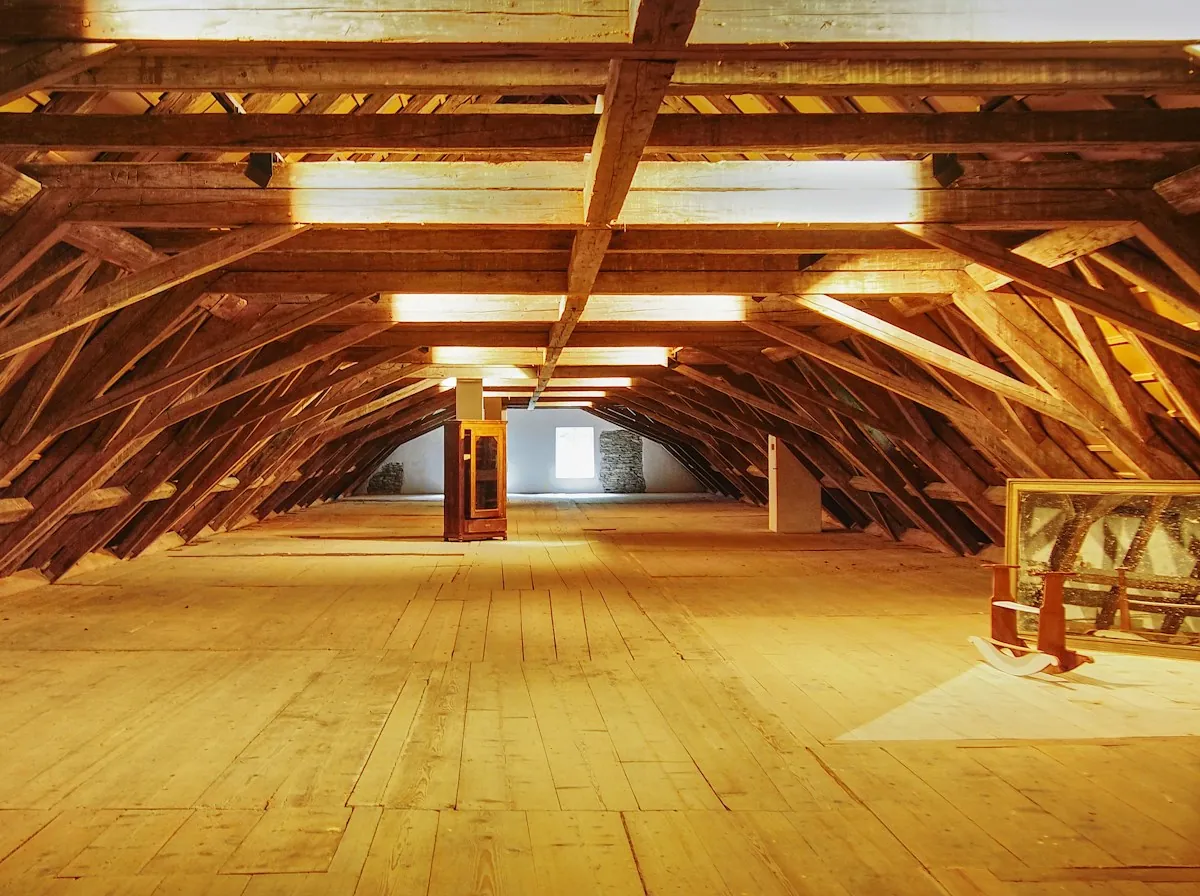
On a low-pitched Orange County tract roof the entry point is almost never above the stain. Water runs along a rafter or the top of the ceiling and drops at the first low point it reaches, which can be several feet from where it got in.


Most leak repairs land between $350 and $1,500. Caught early, before the deck is wet, minor repairs start around $200 to $500. Orange County runs at or above the wider Los Angeles market, so treat these as a floor rather than a ceiling. Downtown prices off the street as much as the roof. Restricted loading, nowhere to stage, a dumpster that needs arranging rather than assuming, and work sequenced around whatever is trading below. A quote silent on all of that will move once work starts.
Calling at the first stain. A leak that has not reached the sheathing is a flashing job, not a carpentry job.
Wet decking, a second story, tile that has to be lifted to reach the detail, or an out-of-hours call.
If the same slope has been patched twice, we will say so and price the replacement instead of selling you a third patch.
The city's original commercial core, with the oldest building stock in Fullerton around it.
Mixed: commercial and mixed-use on the main streets, older residential on the blocks immediately behind them.
Downtown is a logistics problem before it is a roofing one. Curbside loading is restricted, there is rarely anywhere to put a dumpster, and work above an occupied business has to be sequenced around its opening hours. Low slope behind parapets is the common covering, and the parapet coping is where it usually lets go.
Downtown Fullerton holds the city's oldest building stock, and almost every job there is shaped by access and loading before anything else.
Worth knowing before you start ringing round, and worth factoring into anything with a deadline on it.
Roofs here fail quietly through a dry summer -- ultraviolet light and heat working on the covering, sealant hardening around every skylight curb, laps loosening -- then a Santa Ana lifts whatever was already loose, and the first serious rain finds all of it at once. Every roofer in north Orange County takes those calls on the same three nights.
Downtown the equivalent detail is a rooflight or hatch on a low-slope roof behind a parapet, and those fail at the curb upstand in the same way a pitched-roof skylight fails at the curb.
Concrete tile and forty-year-old skylights.
Above the golf course. Wind finds the upslope face.
Big lots, old trees, and litter in every valley.
The newest stock here. Usually one failed detail.
1920s to 1970s on one street. Check the deck.
Backs onto the park. Debris and brush exposure.
A different city, with its own building department.
The questions this job turns on, answered up front.
Usually not. Water gets in at a junction, runs along a rafter or the top of the ceiling, and drops at the first low point it reaches. On a low-pitch tract roof that can be several feet from the entry point, which is why the attic gets walked as well as the roof.
Yes, and it is the most useful symptom you can give us. A roof that leaks only in driving rain is usually failing at an upstand, a skylight curb or a lap that is fine under vertical water, which narrows the search a long way before anyone climbs a ladder.
Because most online figures are national. Asphalt shingle is about $8.50 per square foot across this market against roughly $4 nationally. A quote that matches a national average is usually missing something -- most often the tear-off or the sheathing allowance.
A repair usually does not; a re-roof does. In this city it comes from the City of Fullerton, and in Brea from the City of Brea -- both are their own incorporated cities and neither goes through LADBS. We pull it, and the inspection that comes with it is your independent check that the specification was followed.
One that has not reached the structure. If the stain is small, dry between rains and the sheathing above it is still sound, that is a minor leak and a few hundred dollars. Once the decking has softened or the insulation is wet, it stops being minor regardless of how small the stain looks.
Free inspection, and a written quote against a written scope. Every slope photographed before and after - the set is yours.