Roof Leak Repair in Golden Hill from $200. Finding where the water gets in, not where the stain shows. Free inspection and a written quote.
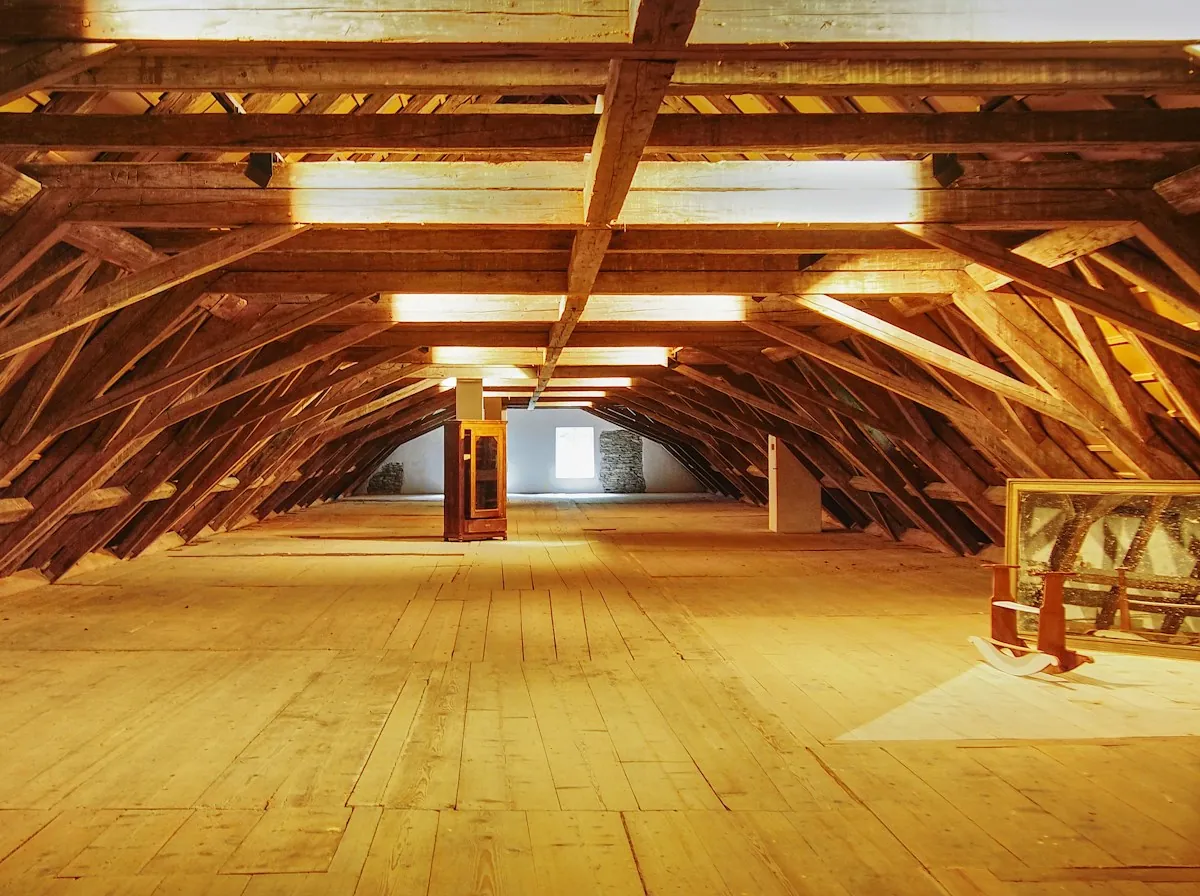
The first question on a Golden Hill leak is how old the house is, because this neighborhood spans the 1920s to the 1970s and two houses that look alike can be forty years apart. A 1920s roof may still be on skip sheathing with a covering nailed into gaps; a 1970s one is on plywood. They fail differently and they are repaired differently.
On a low-pitched Orange County tract roof the entry point is almost never above the stain. Water runs along a rafter or the top of the ceiling and drops at the first low point it reaches, which can be several feet from where it got in.


Most leak repairs land between $350 and $1,500. Caught early, before the deck is wet, minor repairs start around $200 to $500. Orange County runs at or above the wider Los Angeles market, so treat these as a floor rather than a ceiling. The deck decides the price here. Skip sheathing on a 1920s house has to be overlaid before a modern covering goes down, and that is a real cost a quote written without going up will not contain. Two neighboring houses can differ by thousands on exactly that.
Calling at the first stain. A leak that has not reached the sheathing is a flashing job, not a carpentry job.
Wet decking, a second story, tile that has to be lifted to reach the detail, or an out-of-hours call.
If the same slope has been patched twice, we will say so and price the replacement instead of selling you a third patch.
Northwest of Downtown and southeast of Coyote Hills, with housing spanning the 1920s to the 1970s and Hiltscher Park on its edge.
Fifty years of building in one neighborhood -- period houses, post-war infill and 1970s additions sitting side by side.
Golden Hill is the hardest neighborhood in the city to quote from the street, because two houses that look alike can be forty years apart. A 1920s house may still be on skip sheathing, which a modern covering cannot be nailed into without an overlay first; a 1970s one next door is on plywood. Which deck you have changes the price, and only a survey answers it.
Golden Hill carries housing from the 1920s through the 1970s, so the deck under the covering varies street by street rather than neighborhood-wide.
This is the most expensive mistake a homeowner makes in this market, and it is usually made on someone else's advice.
A skylight curb that has let go, a split upstand, a cracked vent boot: each is a repair costing hundreds, and each gets produced as evidence that the covering around it is finished. The two claims are not connected.
A tile roof quoted at $30,000 to $60,000 is very often an $8,000 to $22,000 lift and relay, because the tile is fine and only the felt beneath it has failed.
Sometimes the answer really is a replacement, and saying so is the same job as saying the opposite. What you should not accept is either answer without being shown why.
On the older Golden Hill houses a skylight has often been added long after the roof was built, cut into a deck that was never designed for it.
Concrete tile and forty-year-old skylights.
Above the golf course. Wind finds the upslope face.
Big lots, old trees, and litter in every valley.
The newest stock here. Usually one failed detail.
Backs onto the park. Debris and brush exposure.
Oldest stock, parapets, and nowhere to park a truck.
A different city, with its own building department.
The questions this job turns on, answered up front.
Usually not. Water gets in at a junction, runs along a rafter or the top of the ceiling, and drops at the first low point it reaches. On a low-pitch tract roof that can be several feet from the entry point, which is why the attic gets walked as well as the roof.
Yes, and it is the most useful symptom you can give us. A roof that leaks only in driving rain is usually failing at an upstand, a skylight curb or a lap that is fine under vertical water, which narrows the search a long way before anyone climbs a ladder.
Someone who will go in the attic. On a low-pitch roof the water enters at a junction and travels before it drops, so the hole is rarely above the stain. Anyone who quotes from the ground, or from a photograph, is guessing at which detail failed.
Composition shingle, twenty to twenty-five years. Concrete tile, fifty or more -- but the felt underneath it, twenty to thirty, which is why tile roofs leak with the tile still perfect. Skylight sealant is the shortest-lived part of most roofs here at ten to fifteen years.
A repair usually does not; a re-roof does. In this city it comes from the City of Fullerton, and in Brea from the City of Brea -- both are their own incorporated cities and neither goes through LADBS. We pull it, and the inspection that comes with it is your independent check that the specification was followed.
Free inspection, and a written quote against a written scope. Every slope photographed before and after - the set is yours.